


At Photon, I got asked this question EVERY SINGLE DAY:
What if consumer AI ends up with one or two winning super agents? Why would anyone need anything else in consumer?
tldr: super agents won’t eat the world
for context, I work with hundreds of consumer AI founders building for millions of users. Many of the consumer agents you’ve heard of run on our infrastructure
A few general assistants could become enormous. They might be where many people start their day, ask questions, and coordinate tasks.
But there’s a much bigger claim hiding underneath: that those assistants will own every valuable consumer relationship, while everyone else becomes an interchangeable API.
That’s the part I’m betting against.
For three reasons.
1 - Trust can deepen without becoming universal
Trust is never a single-dimension score that researchers can optimize. It depends on task, timing, relationship, and so much more
The strongest case for one super agent is obvious: the longer I use it, the better it knows me. It remembers my preferences, understands my shorthand, and saves me from explaining myself again.
But familiarity can grow while boundaries remain.
I might want an agent to remember my anxiety when we talk about a difficult relationship. I might also want to use a business proposal without wondering whether that conversation is shaping its advice.
That is the same as all the apps trying to get access to your contacts and photo album, and i know for sure that Uber NEVER needs to have access to my photos to have "full context"
People are reluctant to grant access to their personal data, especially when they don't expect to be asked. As the graph below shows, unexpected permission requests were more than twice as likely to be denied (26.9% vs. 12.2%).
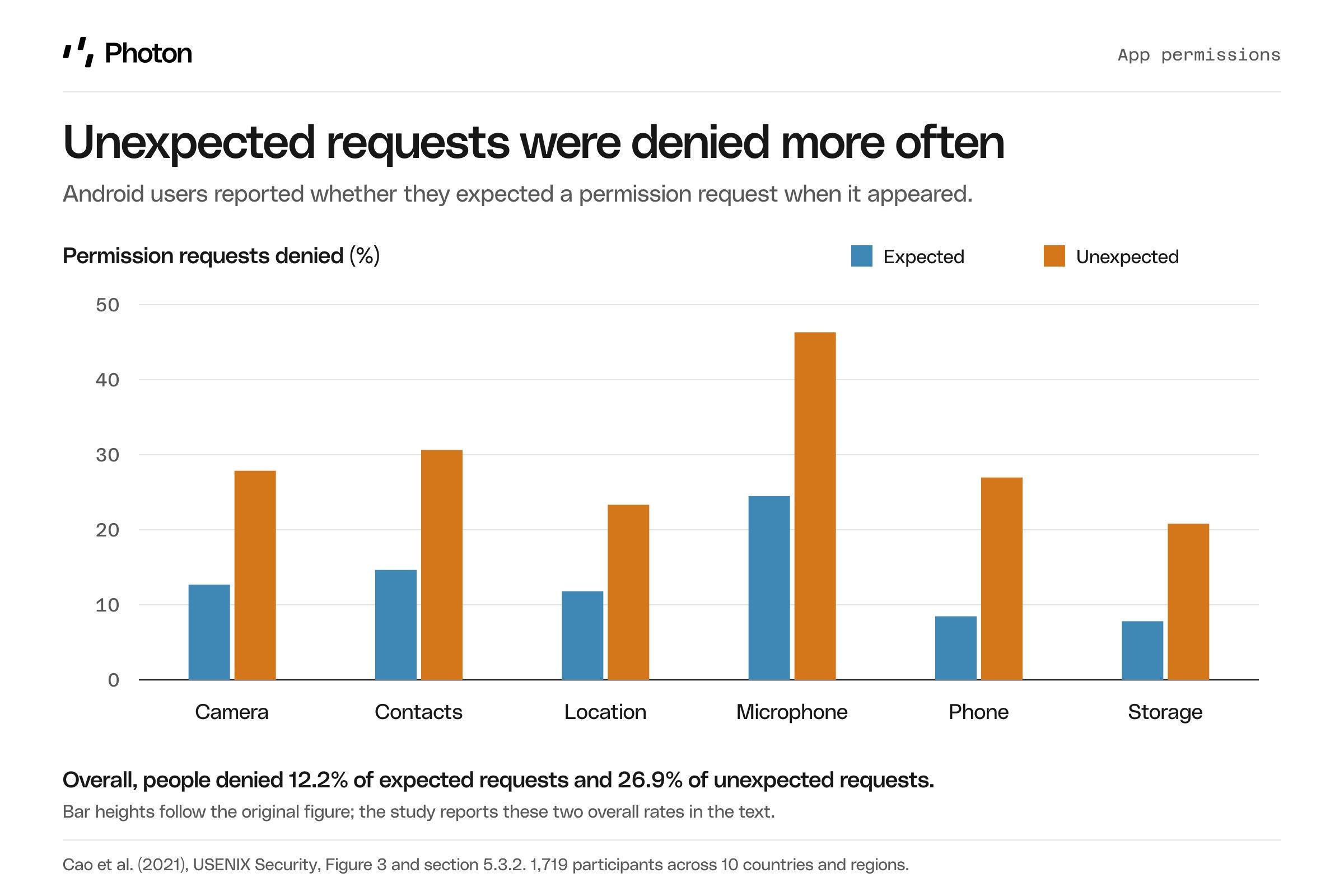
And that's for individual permissions like camera, location, or microphone access. Imagine a super agent asking for access to all your messages, finances, health records, and personal data.
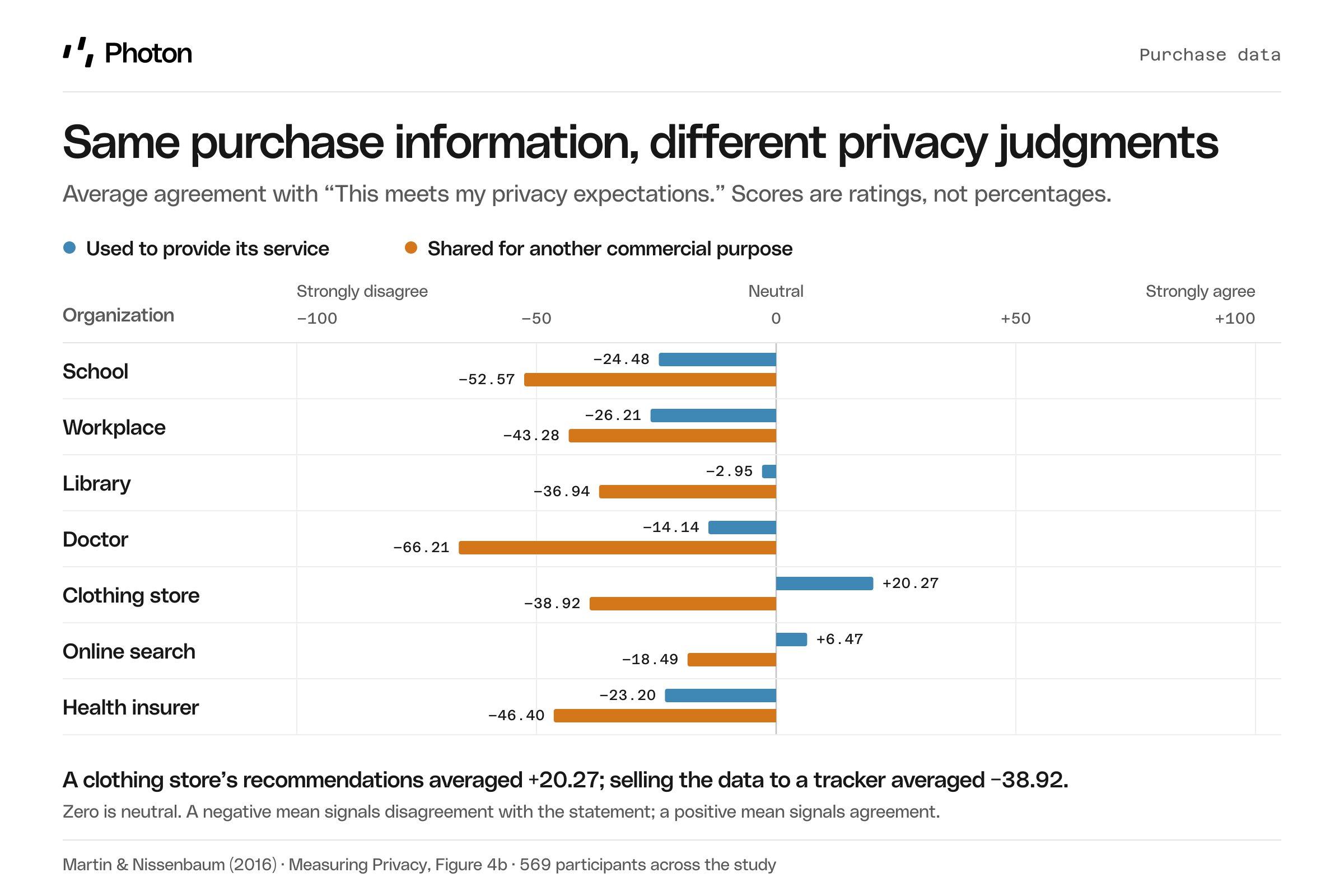
People may trust AI with specific tasks, but that doesn't mean they'll trust one agent with everything. Trust can deepen without becoming universal. For example, purchase information could belong in a retail relationship and feel inappropriate in a health-insurance relationship, and in many cases, the context can hurt the user experience. Source
People will develop distinct relationships with agents for different parts of their lives. Some may share an app or an underlying model. Others may come from different companies. An agent can become more trusted within a role without becoming the relationship we want for every role.
2 - Brands won’t quietly become interchangeable APIs
Now look at the other side of the interaction. The platforms and brands.
If a general agent controls discovery, chooses the supplier, and can swap that supplier without the customer noticing, the supplier risks losing pricing power and repeat demand.
That gives companies a reason to protect their customer relationships. It also gives them a reason to build their own agents.
Simple example from DoorDash: if a super agent can place an order directly with any restaurant and facilitate communication between customer and owner (and potentially with the delivery service), DoorDash will lose its cut.
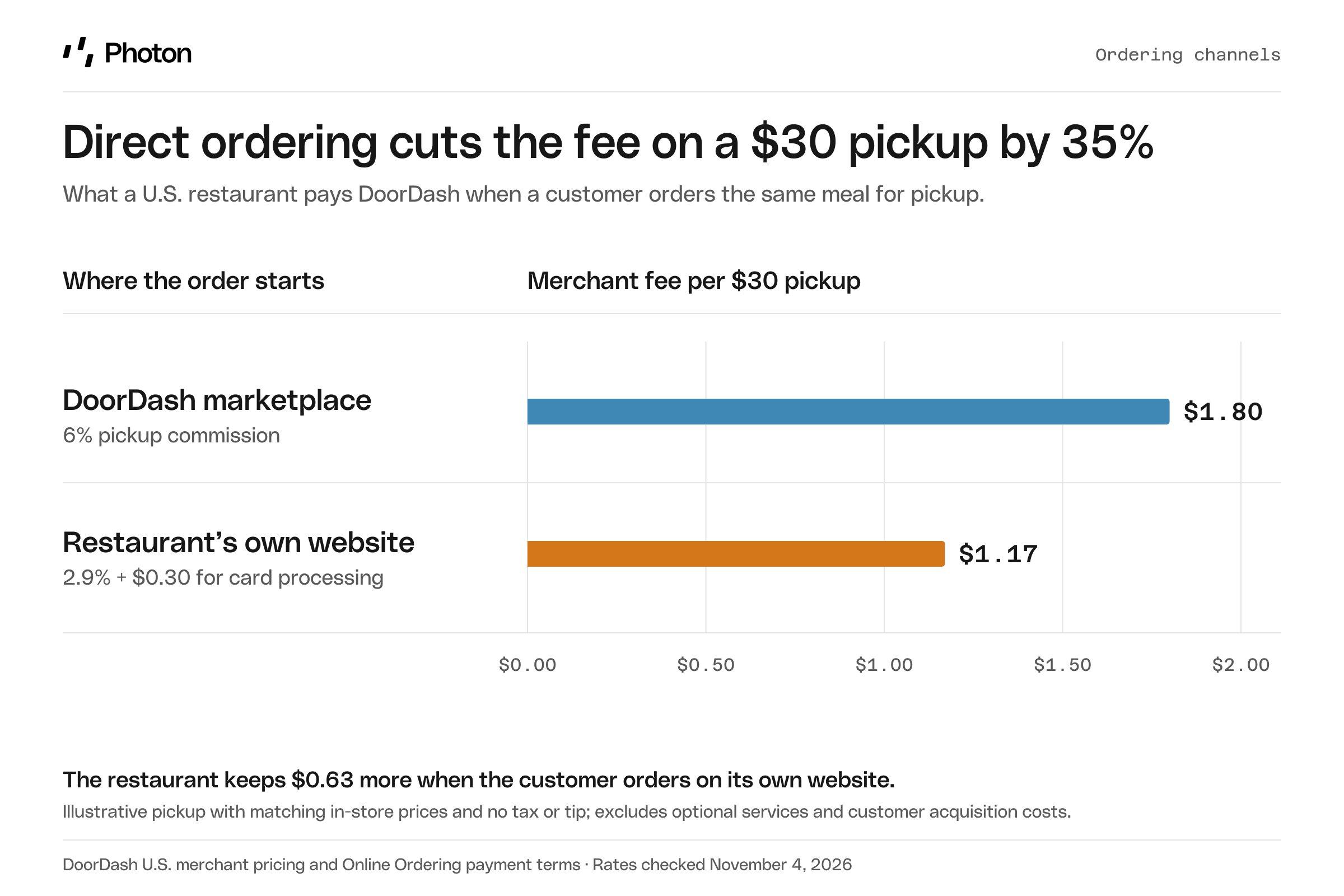
A general assistant can help someone discover a service. The service can also maintain a direct conversation with its customer.
The app can disappear from a transaction without the brand disappearing from the relationship.
Access is being contested, too. eBay’s user agreement explicitly restricts automated access - including buying agents - unless eBay gives prior express permission. That doesn’t determine who wins, but it makes clear that a general agent cannot assume every marketplace is open for unrestricted use. Source
And a marketplace is more than a screen.
Imagine a super agent finds a homeowner, hires a cleaning crew, and coordinates check-in. Has it replaced Airbnb?
It has assembled part of a workflow. It still needs reliable supply, identity checks, payments, protection, and someone accountable when the stay goes wrong.
On Airbnb’s February 2026 earnings call, Brian Chesky argued that much of what Airbnb does is “not the app that you see.” He pointed to the operational systems behind the booking, including verification, payments, support, and protection. Source
Of course Chesky is defending his business. Airbnb can be disrupted. But these are the things a challenger has to replace.
Coordinating a booking and operating a marketplace are different businesses.
Some incumbents will lose. Some services will become interchangeable. But companies that provide real supply, service, and trust have assets with which to compete for the relationship.
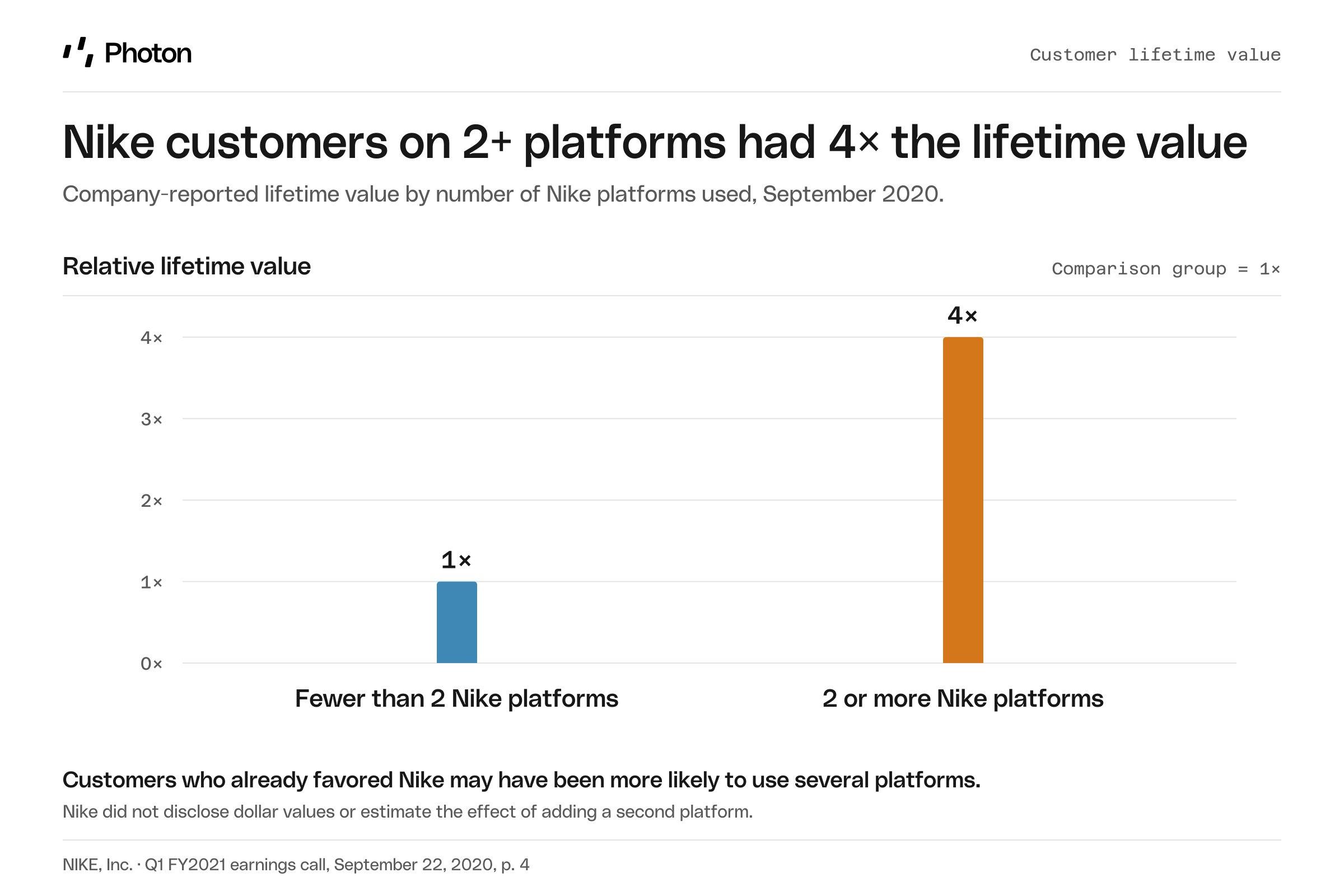
Lastly, multiple surfaces don't conflict. Having customers on additional surfaces will most likely bring in benefits: in-person store, SMS, iMessage, apps, websites, and more. For example, Nike has 4x LTV with customers on more channels and platforms.
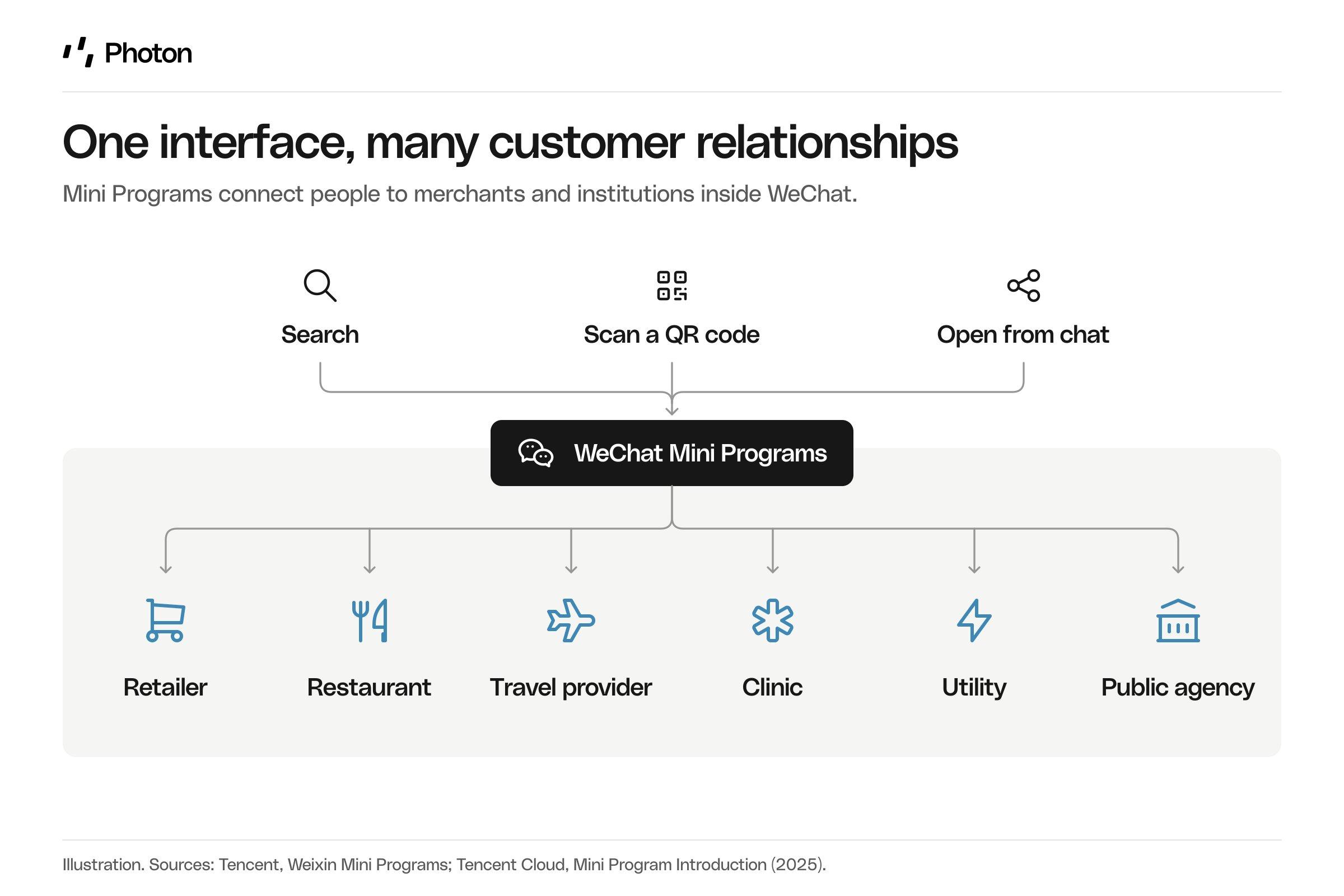
3 - One interface can contain many relationships
Suppose one super agent wins. It’s the first thing a billion people open every morning. Why would anyone build another consumer AI product?
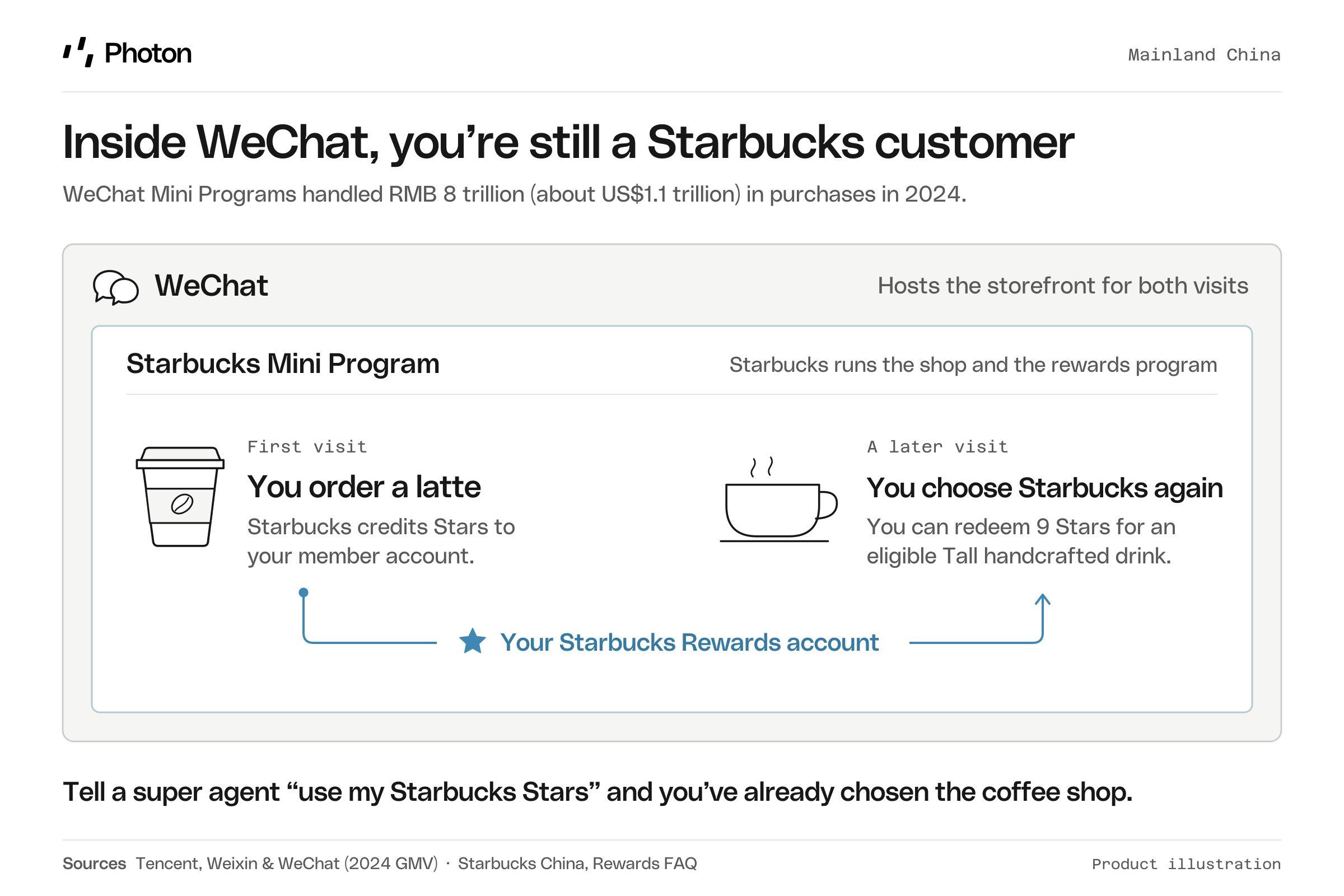
I’d ask the same question about WeChat. Once everyone was on WeChat, why did Starbucks bother building anything there? Because everyone was on WeChat.
In WeChat, you can order a latte through Starbucks’ Mini Program and earn Stars on the same account you use in stores. Starbucks could build a product worth coming back to without convincing you to download another app. Across all Mini Programs, Tencent reported roughly $1 trillion in gross merchandise value in 2024.
Now say I ask my personal assistant to find me a running coach. It introduces me to a coaching agent. Six weeks later, I’ve missed my Sunday long run and need to change my training plan. I want to pick up the conversation with the coach who wrote it and knows how the last six weeks went.
I might reach that coach through the same assistant. I might text it directly. Either way, there’s a second consumer AI product I’d come back to. And the first assistant is how I found it.
What I think actually happens
My bet is on a mixed world:
A few large personal assistants help people discover, compare, and coordinate.
Specialist and brand agents handle particular services, with their own context and accountability.
Some relationships happen through a general assistant. Others happen directly, in messages or inside the service itself.
This doesn’t require consumers to download a hundred new apps. An agent can be a conversation you return to when you need it.
Sometimes I’ll ask my assistant to compare options. Sometimes I’ll text the business I already trust. Sometimes the agents will coordinate and I’ll only see the result.
For builders, the question becomes: what relationship are you earning, and why will someone return?
That’s the bet behind what we’re building at Photon: more businesses becoming conversational, with agents people can reach where they already communicate.
A few companies may win the front door. I’m betting they won’t own every relationship on the other side.
Photon is messaging infrastructure for AI agents. One API gives developers access to the channels where people already communicate, including iMessage, SMS, RCS, WhatsApp, Telegram, email, and voice.
We're building the communication layer that lets agents go everywhere.